
What Is the Difference Between a Kilometer and a Mile

今注目を集めている What Is the Difference Between a Kilometer and a Mileについて、多角的な視点を分かりやすく掲載しています。
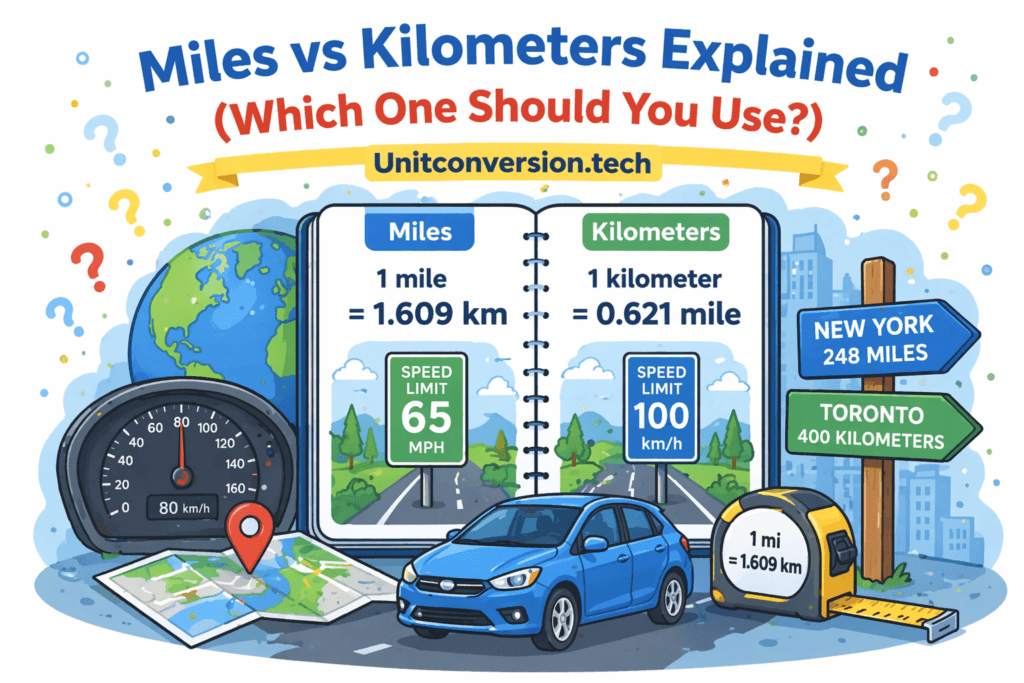
This isn’t just random chaos. The mile comes from ancient Rome, where they measured 1,000 paces (a “mille passus”). Meanwhile, the kilometer was born during the French Revolution as part of the metric system—a neat, decimal-based way to measure everything. Today, most of the world (including Europe, Asia, and Africa) uses kilometers. The United States, Myanmar, and Liberia are the holdouts for miles.
Imagine you’re on a family road trip in France. You see a sign that says “Paris: 200 km.” If you’re thinking in miles, you might panic and assume it’s about 120 miles—which is actually pretty close. But if you miscalculate by a lot, you could end up driving right past your hotel. That’s why understanding the difference is a practical life hack.
A Little Story to Make It Click
Last summer, my friend Sarah decided to run a “10k” race. She was thrilled until she realized that 10 kilometers is 6.2 miles. “I thought a 10k was short!” she groaned. She’d been picturing a 5-mile jog, but the extra 1.2 miles nearly did her in. She finished, but she learned a lesson: never underestimate the kilometer.
On the flip side, my neighbor Dave brags about walking 5 miles every morning. When I told him that’s about 8 kilometers, he looked at me like I’d just told him he was secretly Olympic-level. “Eight klicks? That sounds way more impressive,” he said. And honestly, it does. There’s a reason marathon runners say “26.2 miles” rather than “42.195 kilometers”—the mile version sounds slightly less terrifying.
最新のテクノロジーと生活デザインの融合をテーマに、国内外の最新トピックを発信しています。
